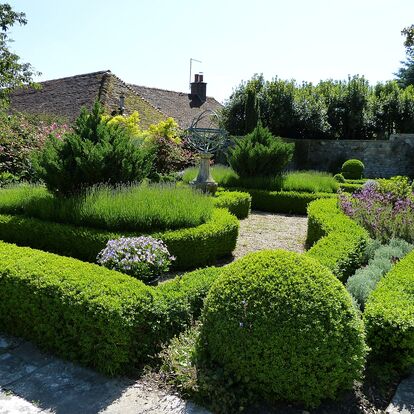
Gardens only a few miles apart in Surrey can behave completely differently. A garden in Merrow on the edge of the North Downs sits on chalk. A garden in Horsell or Knaphill is likely to be on sandy heathland soil. Head south to Cranleigh and you're on heavy clay. Understanding your soil is the single most useful thing you can do before choosing plants, planning a lawn or starting a garden design.
This guide compares the two contrasting soils we see most north and east of the county's clay: the chalk around Guildford and the sandy soils around Woking.
Why Surrey soils vary so much
Surrey's geology runs in bands. The chalk of the North Downs, including the Hog's Back, runs east to west through Guildford. To the south lies the sandy Lower Greensand around Godalming, Shalford and Bramley, and beyond that the Weald Clay around Cranleigh. North of the Downs, much of Woking sits on sandy deposits that support heathland such as Horsell Common. Along river valleys like the Wey, you'll also find heavier alluvial soils.
On top of that, building work changes things locally. Many gardens have imported topsoil, buried rubble or compacted ground, so it's always worth checking your own garden rather than relying on the map.
How to tell what soil you have
- Look and feel: chalky soil is often pale and stony, with white lumps and flints. Sandy soil feels gritty and won't hold together when squeezed. Clay is sticky when wet and forms a ball you can roll into a sausage.
- Test the pH: a simple kit from a garden centre shows whether your soil is alkaline, neutral or acidic. Chalk is alkaline. Woking's heathland sands are often acidic.
- Look at what grows nearby: rhododendrons and heathers thriving locally suggest acidic soil. Wild clematis (old man's beard), yew and beech on the Downs suggest chalk.
Gardening on Guildford chalk
Characteristics
Chalk soils are free-draining and alkaline. Topsoil is often shallow, sometimes only a spade's depth before you hit solid chalk, and full of flints. They dry out fast in summer and can be low in organic matter and some nutrients.
Plants that thrive
Many plants love chalk, including lavender, rosemary and other Mediterranean herbs, clematis, buddleja, philadelphus, cotinus, lilac, scabious, pinks, salvias, beech and yew hedging, and many ornamental grasses. Wildflower meadows on chalk can be particularly rich.
What struggles
Acid-loving plants such as rhododendrons, azaleas, camellias, pieris and most heathers struggle on chalk. They often develop yellow leaves because they can't take up iron in alkaline soil. If you want them, grow them in containers of ericaceous compost.
Tips for chalk
- Add plenty of organic matter every year to help hold moisture and nutrients
- Mulch borders in spring while the soil is moist
- Build raised beds or import topsoil where the soil is very shallow
- Choose drought-tolerant lawn seed and avoid mowing too short in summer
Gardening on Woking sandy soil
Characteristics
Sandy soils are light, easy to dig and warm up quickly in spring. They drain very freely, so they rarely waterlog, but they dry out quickly and nutrients wash through easily. Heathland sands around Woking are usually acidic and naturally low in fertility.
Plants that thrive
Acidic sandy soils suit rhododendrons, azaleas, camellias, pieris, heathers, blueberries, Japanese maples in sheltered spots, and many conifers. Silver birch and Scots pine grow naturally on local heaths. Drought-tolerant plants such as cistus, lavender and many grasses also do well, provided the soil isn't too acidic for them.
What struggles
Plants that need rich, moisture-retentive soil, such as roses, hostas and many vegetables, need extra help on sand. Without improvement, they can look hungry and suffer in dry spells.
Tips for sandy soil
- Dig in generous amounts of organic matter, such as compost or well-rotted manure, and mulch thickly
- Feed little and often, as nutrients wash away
- Water deeply and less often rather than a little every day
- Group thirsty plants together, and consider irrigation for borders and new lawns
Lawns on chalk and sand
Both soils drain quickly, so lawns brown in hot, dry weather. Raise the mowing height in summer, leave clippings on occasionally to return nutrients, and feed in spring and autumn. Brown summer lawns usually recover when the rain returns. When creating a new lawn, a good depth of quality topsoil makes a big difference. See our guide to turf vs seed for a new lawn in Surrey.
What about clay?
If your garden is on clay, as is common around Cranleigh, the challenges are the opposite: waterlogging in winter and cracking in summer. Our guide on fixing a waterlogged clay garden covers that in detail.
Getting professional help
A planting scheme that suits your soil will look better and need less work. We consider soil, aspect and drainage when we plan landscaping projects and when we look after gardens through regular garden maintenance.
Evergreen Gardeners work across Guildford, Godalming, Woking and Cranleigh, plus the villages in between.
Frequently asked questions
Can I grow rhododendrons on chalk in Guildford?
Not easily in the ground, as they need acidic soil. They can be grown successfully in large containers filled with ericaceous compost.
Is sandy soil good for gardening?
Yes, with the right care. It's easy to work, warms up early and rarely waterlogs. Adding organic matter and feeding regularly helps it hold water and nutrients.
How do I find out if my soil is acidic or alkaline?
Use a soil pH test kit, available from garden centres. Test samples from a few spots, as soil can vary within one garden.
Do you choose plants to suit local soils?
Yes. Our planting plans are based on your soil type, aspect and how much maintenance you want.
For a free, no-obligation quote, call Evergreen Gardeners on 07383 778366 or send us a message. We'll visit, talk through what you need and give you a clear written price.